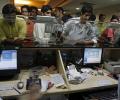
In view of the economic shock caused by the COVID-19 pandemic, Reserve Bank of India (RBI) on Friday asked scheduled commercial banks and co-operative banks not to make any dividends for the financial year ended March 2020. In view of the ongoing stress and the heightened uncertainty on account of the pandemic, RBI said it is imperative that banks continue to conserve capital to support the economy and absorb losses, if any. The decision is based on review of the September quarter financial performance of banks.

Stock market investors are expecting a balanced Budget with a focus on job creation, increased spending on infrastructure, reigning in the deficit, and bringing the economy back on track, experts said on Wednesday. Stock markets have been subdued in the run-up to the Union Budget with BSE's benchmark Sensex is almost flat so far this month. Even the corporate earning season failed to excite the markets, while some indices like IT and bankex have seen some positive movements.

RBI is likely to continue with its tough stance on monetary policy to maintain price and financial stability.

The big lesson to learn from the world's worst financial crisis is that nations and industry should see globalisation as a friend.

Move to shift powers from RBI without discussions baffles many

The G20's Bali Declaration Wednesday acknowledged differences among members on the Russia-Ukraine war but said it was essential to adhere to international law, including protection of civilians caught in conflicts.

The recent revelations of financial irregularities, as in real estate firms allegedly involved in a loan syndication bribery case and the 2G telecom licence scam, may impact credit flow.

If you don't have a specific goal, but want intermittent liquidity, then ladder your FDs, that is, invest in FDs of varying maturities, such as one, two, three, five or even 10 years. Laddering ensures FDs mature at regular intervals.

Global trends, macroeconomic data, and the outcome of the US Fed policy meeting are the major factors that will drive the movement in the domestic equity markets this week, analysts said. "In the upcoming data-centric week, the focus will be on crucial releases, including inflation data from India and the US. "Indian inflation is expected to rise, while US inflation will remain steady.
Delay in the tapering of the $85 billion-a-month bond buyback programme by the US Fed (tapering will start from January 1) gave the country time to replenish the forex reserves and rein in the high current account gap.

Adani group opened a $1.2 billion copper plant, bought a port in Odisha, raised stakes in a cement company and stitched an alliance with rival Mukesh Ambani's Reliance Industries, all in a matter of one week in signs that the apples-to-airport conglomerate has shrugged off the Hindenburg effect and is back to rapid expansion spree. In the last one week, Adani group has through regulatory filings and press statements announced expansions and investments in its mainstay ports business, diversification into metal refining, fund infusion into a two-year-old cement foray and continuing progress in the commissioning of its mega solar project.

'From a risk-return perspective, large-cap funds may generate lower-than-historical average returns in 2024, whereas mid-, and small-cap funds hardly have any upside left.'

Adani Total Gas Ltd, the joint venture of billionaire Gautam Adani's group and French energy giant TotalEnergies, will invest Rs 18,000 crore to Rs 20,000 crore in the next 8 to 10 years to expand infrastructure for retailing CNG to automobiles and piping gas to households and industries, its CFO said. The company retails CNG to automobiles and pipes gas to household kitchens for cooking purposes in 52 licences that cover 124 districts of the country. It has 460 CNG stations in the country and about 7 lakh consumers of its piped cooking gas.

Gold and silver imports during April, 2013 jumped by 138 per cent to $7.5 billion against $3.1 billion in the year-ago period.

On the Sensex chart, SBI was the top gainer, rallying around 4 per cent, followed by Bharti Airtel, Reliance Industries, HDFC Bank, ITC, Axis Bank and NTPC. NSE Nifty advanced 78.70 points to a fresh closing peak of 14,563.45.

Bankers said the outlook of M&As in India in 2024, especially in the second half after the Lok Sabha election, seems relatively better.

The Indian economy is projected to grow at 6.3 per cent in current financial year aided by investment and domestic demand. According to a World Bank report released on Tuesday, India continues to show resilience against the backdrop of a challenging global environment. In India, which accounts for the bulk of South Asia region, growth is expected to remain robust at 6.3 per cent in 2023-24, India Development Update of the World Bank said.

A 25 per cent year-on-year (Y-o-Y) increase in budget allocation towards the roads sector for FY24 has led to renewed interest among investors. However, a combination of escalating costs for Bharatmala and unseasonal rains to some extent have impacted progress. Bharatmala's cost has nearly doubled from Rs 5.35 trillion to Rs 10.6 trillion and the finance ministry has asked MoRTH to go slow until Cabinet approval is received.
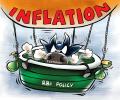
RBI Governor Shaktikanta Das on Friday said that inflation is on a declining trajectory, as it has fallen by 170 basis points from its January 2020 peak. Retail inflation fell to four-month low of 5.91 per cent in March over the previous month, mainly due to easing food prices.

rediffGURU Ulhas Joshi answers readers' mutual fund queries

In a memorable year for the equity market, Dalal Street investors added a whopping Rs 81.90 lakh crore to their wealth in 2023 as a raft of positive factors powered a stellar rally in stocks. Experts said India's strong macroeconomic fundamentals, political stability owing to the BJP's success in recent elections in three significant states, optimistic corporate earnings outlook, signals from the US Federal Reserve about three prospective rate cuts next year and heavy retail investors participation played a major role in fuelling the stock market rally in 2023. In the year 2023, the 30-share BSE Sensex jumped 11,399.52 points or 18.73 per cent.

German Chancellor Angela Merkel and French President Nicolas Sarkozy could not resolve their differences over further boosting the European Financial Stability Facility, recapitalisation of European banks heavily exposed to sovereign debts and a partial write-down of Greek government's debts at a two-hour emergency meeting in Frankfurt on Wednesday night.

The recent run on the US-based Silicon Valley Bank (SVB) and the subsequent seizure of its assets by the regulators may have sparked a global wave of risk aversion, particularly for start-ups. However, the Indian banking sector is unlikely to be a victim of any contagion effects, said analysts. he bank, which played a big role in financing start-ups and technology players, faced stress after incurring huge losses on its holdings of US bonds, following the most-aggressive monetary tightening cycle by the Federal Reserve in around four decades.

The three main regulators have different approaches to grievance redressal and different standards to stop harmful from coming pitched at the consumer.

'It is the best avenue for investors who would like to take long-term exposure to gold.'
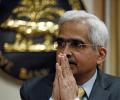
The government has extended the term of Reserve Bank of India Governor Shaktikanta Das by another three years upto December 2024, according to an official order.
The Reserve Bank on Thursday said Indian companies may find it difficult to repay loans as rising input cost is putting pressure on their profit margins.

Pointing out that global economy continues to vulnerable, the declaration issued at the end of the two-day G-20 summit in Los Cabos said, "this effort (to provide $450 billion to the IMF) shows the G-20 and the international community's commitment to take the steps needed to safeguard global financial stability and enhance the IMF's role in crisis prevention and resolution."

More than 2,800 jobs will be axed as Tata Steel plans to close its blast furnaces at the Port Talbot plant in South Wales in the UK. Of the total job cuts, 2,500 will be in the next 18 months, said Indian conglomerate Tata. A further 300 jobs are to go in three years.
Gordan Brown has advised IMF to set up an early warning system to alert economies of impending financial disasters.

Commodity investments can help you diversify your portfolio in asset classes other than equity and debt, says Dwaipayan Bose.

Personal loans offer more flexibility in usage but may come with higher interest rates and shorter repayment terms. It is important for individuals to evaluate their needs, financial situation, and future goals before deciding between the two loan options.

The banking system liquidity bounced back to surplus mode after three weeks, the Reserve Bank of India (RBI) data showed. This was due to government spending, according to dealers. The liquidity situation could further ease with the disbursement of the last tranche of incremental cash reserve ratio (I-CRR) worth Rs 50,000 crore on Saturday.

The statement said that towards ensuring financial stability for the family, Infosys takes into account the statutory payments to be made as per the company policy.

The journey has been tough and unconventional, but it has been worthwhile as Kerala tribal Minnu Mani became the only girl from the state to play in the WPL.

The banking sector balance sheet increased by 19 per cent during the year ended March 31, 2011, spurred by a robust growth of 22.6 per cent in credit off take.

Finance Minister Nirmala Sitharaman on Friday said the entire fiscal stimulus announced by the government would be funded by borrowings and revenues, and taxpayers will not be charged even a single penny. "I am not expecting the stimulus to be funded by taxpayers. Not a rupee from the taxpayer. The entire amount .... is shown as revenue and borrowings. "The government is borrowing to spend, but it is not taking from people," she said while interacting with journalists at the IWPC (Indian Women's Press Corps).

The Financial Stability and Development Council had earlier mandated RBI and the Securities and Exchange Board of India to undertake a review of the existing practices followed by banks and brokerage houses in offering wealth management services.

The additional cash will now give the Centre more headroom for stimulating the economy.

India appears poised to sustain its growth in a more durable way than before with the economy carrying the momentum from FY23 into the current fiscal year, the Annual Economic Review for 2022-23 released by the finance ministry on Thursday said. However, the report cautioned that escalation of geopolitical stress, enhanced volatility in global financial systems, sharp price correction in global stock markets, a high magnitude of El-Nino impact, and modest trade activity and FDI inflows, are factors that could constrain the pace of growth. "Should these developments deepen and dampen growth in the subsequent quarters, the external sector may challenge India's growth outlook for FY24," the finance ministry said.
 © 2026 Rediff.com - Advertise with us - Disclaimer - Privacy Policy - Sitemap - Feedback - About us - Terms of use - Grievances